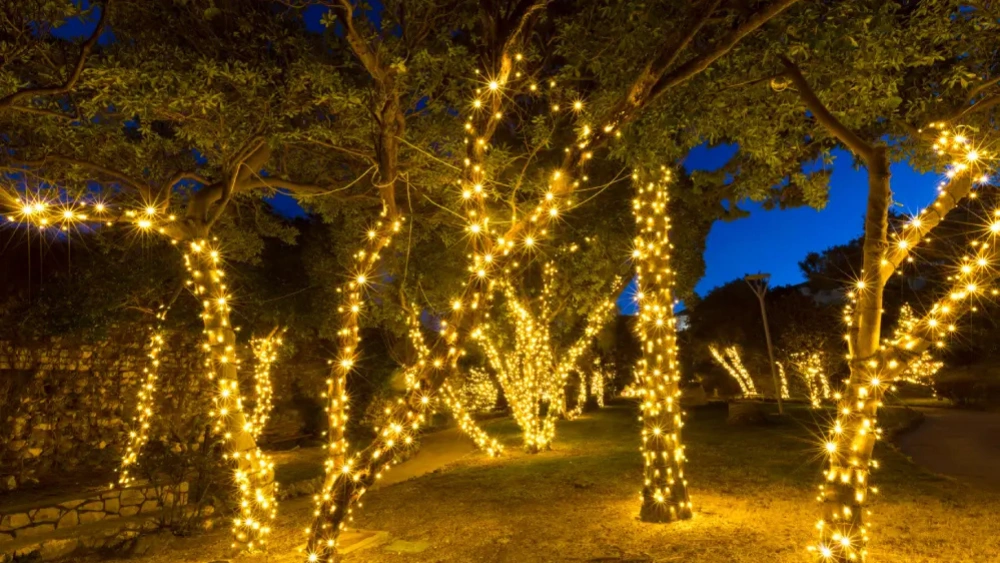
Are you planning to light up your outdoor tree but not sure how many feet of lights you’ll need? Getting the right amount of lights can make all the difference between a dazzling display and a frustrating, half-lit tree.
You don’t want to run out of lights halfway or waste money on too many strands. You’ll discover a simple way to figure out exactly how many feet of lights will perfectly wrap your outdoor tree. Keep reading, and you’ll be ready to create a stunning glow that will impress everyone who sees it.

Credit: www.amazon.com
Choosing The Right Lights
Calculating the right amount of lights depends on the tree’s height and trunk thickness. Typically, 100 lights cover about 1 to 2 feet of branch length. Wrapping tightly ensures even coverage and a bright, festive look.
Choosing the right lights for wrapping your outdoor tree can transform your yard into a dazzling display. Selecting the ideal lights involves considering various factors. These include the type, brightness, color, and energy efficiency of the lights. Each factor plays a crucial role in achieving the perfect look. Understanding these aspects helps you make an informed choice.Types Of Outdoor Lights
Various types of outdoor lights are available for tree wrapping. LED lights are popular due to their durability and energy efficiency. Incandescent lights offer a warm glow but consume more energy. Rope lights provide flexibility for wrapping tight spaces. Fairy lights add a magical touch with their small, twinkling bulbs. Consider the overall effect you want for your tree.Light Brightness And Color
Brightness impacts the visibility and mood of your display. Bright lights enhance visibility but can overwhelm if overused. Choose colors that complement your outdoor decor. Warm white lights give a cozy feel. Cool white lights create a modern, crisp look. Colored lights add a festive atmosphere. Balance brightness and color for an appealing result.Energy Efficiency Options
Energy-efficient lights reduce electricity costs. LED lights consume less power and last longer. Solar-powered lights harness sunlight, eliminating electricity use. Battery-operated lights offer flexibility without the need for outlets. Choose options that save energy and suit your outdoor setup. This ensures a beautiful display without excessive energy use.Measuring Your Tree
Measuring your outdoor tree accurately helps determine the right amount of lights needed. It ensures full coverage without waste. Start by understanding the tree’s size and shape. Consider the height, width, and branch density. These factors affect how many feet of lights you will require. Careful measurement leads to a stunning, well-lit tree.
Estimating Tree Height And Width
Measure the tree’s height from base to top. Use a tape measure or estimate by comparing the tree to a known object. Measure the width at the widest point. Width helps calculate the lights needed around the tree. Both height and width give a rough idea of the tree’s size.
Calculating Branch Density
Branch density refers to how full the tree looks. Count how many main branches or limbs are visible. A tree with many branches needs more lights. Sparse trees require fewer strands. Think about the thickness and spread of branches for better light coverage.
Tools For Accurate Measurement
- Tape measure: Simple and effective for height and width.
- Laser distance measurer: Offers quick, precise readings.
- Smartphone apps: Some apps help estimate tree height and width.
- Notebook and pen: Record measurements to avoid mistakes.
Using the right tools helps get reliable numbers. Accurate data leads to better light planning and a beautiful outdoor display.
Calculating Light Length
Figuring out how many feet of lights you need to wrap an outdoor tree can save you time and frustration. It’s not just about covering the tree; it’s about creating an even, beautiful glow that highlights its natural shape. To get this right, you need to calculate the light length carefully, considering factors like coverage per foot, wrapping style, and the tree’s unique form.
Light Coverage Per Foot
Different light strings cover varying lengths effectively. On average, one foot of light string can cover about 12 to 18 inches of tree branch when wrapped tightly. If you want a denser look, aim for closer to 12 inches per foot; for a softer glow, 18 inches works well.
Think about your tree’s height and width. A tree that’s 10 feet tall and has a 6-foot diameter might need 100 to 150 feet of lights, depending on how dense you want the coverage. Do you want the lights to sparkle with intensity or just gently outline the branches?
Wrapping Techniques
How you wrap the lights impacts the total feet required. Spiral wrapping around the trunk and branches uses less length than weaving back and forth across large limbs. Wrapping tightly around the trunk and main branches creates a uniform light effect but demands more feet.
Try this approach: start at the base and wrap upward in a spiral, spacing the lights evenly. If you notice gaps, add another strand or tighten the spacing. Remember, the tighter the wrap, the shorter the distance between lights, but the more lights you’ll need overall.
Adjusting For Tree Shape
Not all trees are perfect cylinders. Trees with wide, spreading branches or uneven shapes need more lights to fill in the spaces. For example, a pine tree with dense branches requires more lights than a slender birch.
Look closely at your tree’s silhouette. Are there large gaps or thin areas? You might need to add extra length to reach those spots. Have you ever wrapped a tree only to realize the lights look sparse from certain angles? Planning for your tree’s unique shape avoids that problem.
Safety Tips For Outdoor Lighting
Keeping your outdoor tree lights safe is just as important as making them look beautiful. Poorly installed or unprotected lights can lead to accidents or damage. Let’s look at some practical safety tips to ensure your lighting stays secure and your outdoor space remains worry-free.
Weatherproofing Lights
Outdoor lights face rain, wind, snow, and even intense sun. Using weatherproof lights designed specifically for outdoor use is essential. Look for lights labeled with an IP rating, like IP65, which means they can withstand water jets and dust.
Always check the wires and connections for any cracks or damage before installation. Wrapping connections with waterproof tape or using weatherproof connectors helps keep moisture out. Have you ever had a strand of lights stop working after a storm? Proper weatherproofing prevents that frustration.
Proper Electrical Setup
Your outdoor lights need the right power source to avoid electrical hazards. Use outdoor-rated extension cords and outlets with ground-fault circuit interrupters (GFCIs). These outlets cut power instantly if they detect a short circuit or water exposure.
Don’t overload circuits by plugging too many light strands into one outlet. Check the wattage limits on your lights and your power source to keep everything balanced. If unsure, ask an electrician for advice—your safety is worth it.
Avoiding Fire Hazards
Lights generate heat, and dry tree branches or leaves can catch fire if the lights aren’t installed carefully. Make sure your lights have cool LED bulbs instead of traditional incandescent bulbs, which get much hotter.
Secure the lights tightly to avoid sagging or contact with flammable materials. Inspect your lights regularly for frayed wires or broken bulbs, replacing any damaged parts immediately. Have you ever noticed a burnt smell near your lights? That’s a clear warning sign not to ignore.
Creative Wrapping Ideas
Creative wrapping ideas make outdoor trees look magical and inviting. Lights can change the whole mood of your yard. Different styles bring unique charm and brightness. Experimenting with light placement helps find the best look. Choose the style that fits your tree and space.
Spiral Wraps
Spiral wraps follow the tree trunk from bottom to top. Wrap lights evenly with a gentle twist around the trunk. This method highlights the tree shape simply and elegantly. Use warm white lights for a classic look or colored lights for fun. Spiral wraps are easy to do and look neat.
Cluster Lighting
Cluster lighting groups lights closely on branches or trunk areas. Create small bunches or clusters of lights for a glowing effect. This style adds depth and texture to the tree’s appearance. Use clusters to highlight special parts of the tree. It works well for trees with thick branches.
Highlighting Branches
Highlight branches by wrapping lights along their length. Focus on main branches to draw attention upward. This method adds a natural and airy feel to the tree. It shows off the tree’s structure beautifully at night. Use twinkling lights for a sparkling effect.

Credit: www.amazon.com
Maintaining Your Lights
Maintaining your outdoor tree lights ensures they shine bright season after season. Proper care prevents damage and keeps your display safe. Regular checks and smart storage help avoid costly replacements.
Troubleshooting Common Issues
Check bulbs for burns or loose connections. Replace any broken bulbs immediately. If a section is dark, test the fuse and wiring. Use a voltage tester to find power problems. Clean bulbs gently to remove dirt. Moisture can cause flickering; ensure lights are dry. Secure loose wires to prevent shorts or breaks.
Storage Tips After Use
Turn off and unplug lights before removal. Remove bulbs carefully to avoid damage. Wrap lights loosely around a spool or cardboard. Store in a cool, dry place away from sunlight. Avoid tangling by using twist ties or zip ties. Keep lights away from heavy objects to prevent crushing.
Extending Light Lifespan
- Use LED lights for longer durability and lower heat.
- Keep lights away from water and harsh weather.
- Check connections regularly to prevent shorts.
- Use outdoor-rated lights and extension cords.
- Turn lights off during the day to save power.
- Replace damaged parts quickly to avoid bigger issues.
Credit: blog.davey.com
Frequently Asked Questions
How Many Feet Of Lights For A 6-foot Tree?
For a 6-foot outdoor tree, use about 100 feet of string lights. This ensures even coverage and vibrant illumination.
What Factors Affect Light Length For Tree Wrapping?
Tree height, trunk thickness, and branch density affect the needed light length. Larger, denser trees require more feet of lights.
How To Calculate Feet Of Lights Per Inch Of Trunk?
Use 100 feet of lights for every 3 inches of trunk diameter. This ratio helps achieve a bright, uniform wrap.
Can I Use Fewer Lights For A Minimalist Look?
Yes, fewer lights create a subtle glow. Use half the recommended length for a soft, elegant effect.
Conclusion
Wrapping lights around an outdoor tree adds charm and warmth. Measure the tree’s height and width to find the right length. Usually, 100 to 300 feet of lights work well for most trees. Choose lights that suit your style and weather conditions.
Take your time to wrap evenly for the best look. Enjoy the glow that brightens your yard and nights. Simple steps, great results. Your tree will shine beautifully all season long.