Are you tired of coming home to a dark porch or worrying about leaving your outdoor lights on all night? Setting an outdoor light timer is a simple solution that saves you time, energy, and money.
Imagine having your lights turn on exactly when you need them, without lifting a finger. In this guide, you’ll discover easy steps to set your outdoor light timer so your home looks welcoming and stays safe, even when you’re not around.
Keep reading—you’ll be amazed at how a small change can make a big difference.

Credit: www.amazon.com
Choosing The Right Timer
Choosing the right timer for your outdoor lights can make all the difference in convenience, energy efficiency, and security. With so many options available, understanding the features and benefits of each type can be overwhelming. However, selecting the perfect timer doesn’t have to be a guessing game. Let’s dive into some key considerations to ensure your outdoor lighting suits your needs perfectly.
Mechanical Vs Digital Timers
Mechanical timers are often seen as the classic choice. They are user-friendly and typically involve setting a dial to control the on/off cycle. Imagine a clock face where you place pins to determine when your lights should turn on or off. It’s straightforward and reliable, especially if you prefer simplicity.
On the other hand, digital timers offer more flexibility and precision. They allow you to set specific times down to the minute, with options for multiple on/off cycles throughout the day. If you’re tech-savvy and enjoy customization, a digital timer might be your best bet. Think about how you like to manage your devices and choose accordingly.
Features To Consider
- Ease of Use:Ensure the timer is intuitive and simple to program. Fumbling with complicated instructions can be frustrating.
- Compatibility:Check if the timer works with your existing outdoor lighting system. Some timers are designed for specific types of bulbs or voltage.
- Battery Backup:Consider timers with battery backup features. This ensures your settings are retained even during power outages.
Think about the features that matter most to you. Do you need a timer that can handle multiple settings, or is simplicity your priority? Making a list of must-have features can guide you toward the right choice.
Weather Resistance
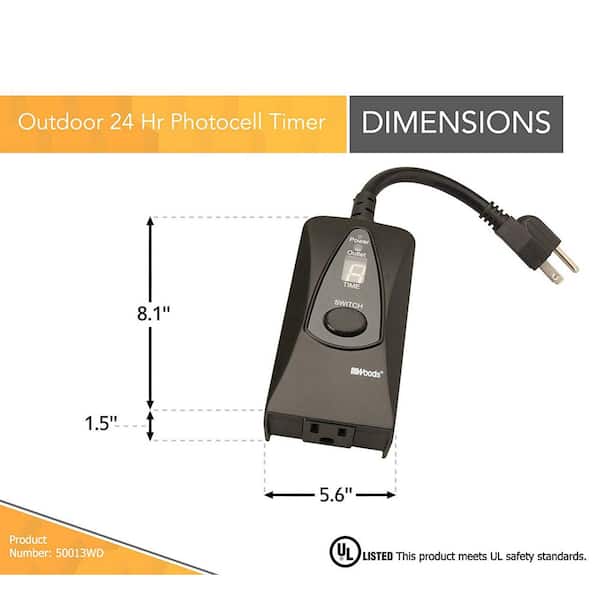
Outdoor timers must withstand the elements. You wouldn’t want your timer to fail during a rainstorm or freeze in the winter. Look for timers specifically designed for outdoor use with weather-resistant casings.
Consider the climate in your area. If you live somewhere with harsh winters or frequent rain, investing in a robust, weatherproof timer is crucial. It ensures longevity and reliable performance, keeping your outdoor lights shining bright no matter what Mother Nature throws your way.
Have you ever experienced a timer malfunction due to weather conditions? Share your insights and help others avoid similar pitfalls!
Credit: www.homedepot.com
Preparing For Installation
Preparing for installation is the first important stage for setting an outdoor light timer. It ensures a smooth, safe, and efficient setup. Proper preparation saves time and avoids common mistakes. Focus on gathering everything needed, understanding safety steps, and finding the right power source.
Gathering Tools And Materials
Collect all tools and materials before starting. This helps avoid interruptions during installation. Common items include:
- Outdoor light timer device
- Screwdrivers (flathead and Phillips)
- Wire strippers
- Electrical tape
- Voltage tester
- Ladder
- Work gloves
Having these ready makes the process faster and safer.
Safety Precautions
Safety is critical when working with electricity outside. Always turn off the power at the circuit breaker before starting. Use a voltage tester to confirm no current flows. Wear insulated gloves for extra protection. Avoid working in wet conditions to prevent electric shocks. Follow all manufacturer instructions carefully.
Locating Power Source
Find the power source that controls your outdoor lights. It could be an outdoor outlet or a dedicated circuit. Trace the wiring from your light fixture to the power supply. Use a voltage tester to identify live wires. Knowing the exact power source helps install the timer correctly and safely.
Installing The Timer
Installing an outdoor light timer is a straightforward process that can save you time and energy. It allows you to control your outdoor lighting automatically, enhancing security and convenience. Here’s how you can get your timer up and running efficiently.
Mounting The Timer
Choose a location near your outdoor power source that’s sheltered from extreme weather. Many timers come with a mounting plate or brackets—use these to secure the timer firmly to a wall or post.
Make sure the timer is positioned at a comfortable height for easy access. If you’ve ever struggled to reach a device, you know how important this step is.
Connecting To Outdoor Lights
Turn off the power before making any connections to avoid shocks. Connect the timer’s wires to your outdoor light’s wiring according to the instructions that come with your timer.
Typically, you’ll connect the timer’s load wire to the light’s power wire and the timer’s neutral wire to the light’s neutral wire. Double-check that all wire connections are secure and insulated properly with wire nuts or electrical tape.
Testing The Setup
Once everything is connected, restore the power and set the timer according to your desired schedule. Observe whether the lights turn on and off at the correct times.
If the lights don’t respond as expected, double-check your wiring and timer settings. Have you ever discovered a loose connection after troubleshooting? It can save you hours of guesswork.
Setting The Timer
Setting the timer on your outdoor lights can save energy and enhance your home’s security. It gives you control over when your lights turn on and off, without the need to remember to do it yourself. Getting this right means you enjoy the perfect balance of convenience and safety every evening.
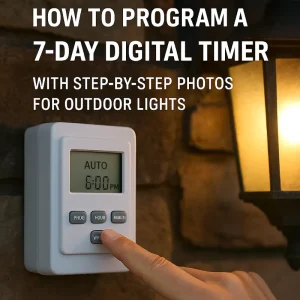
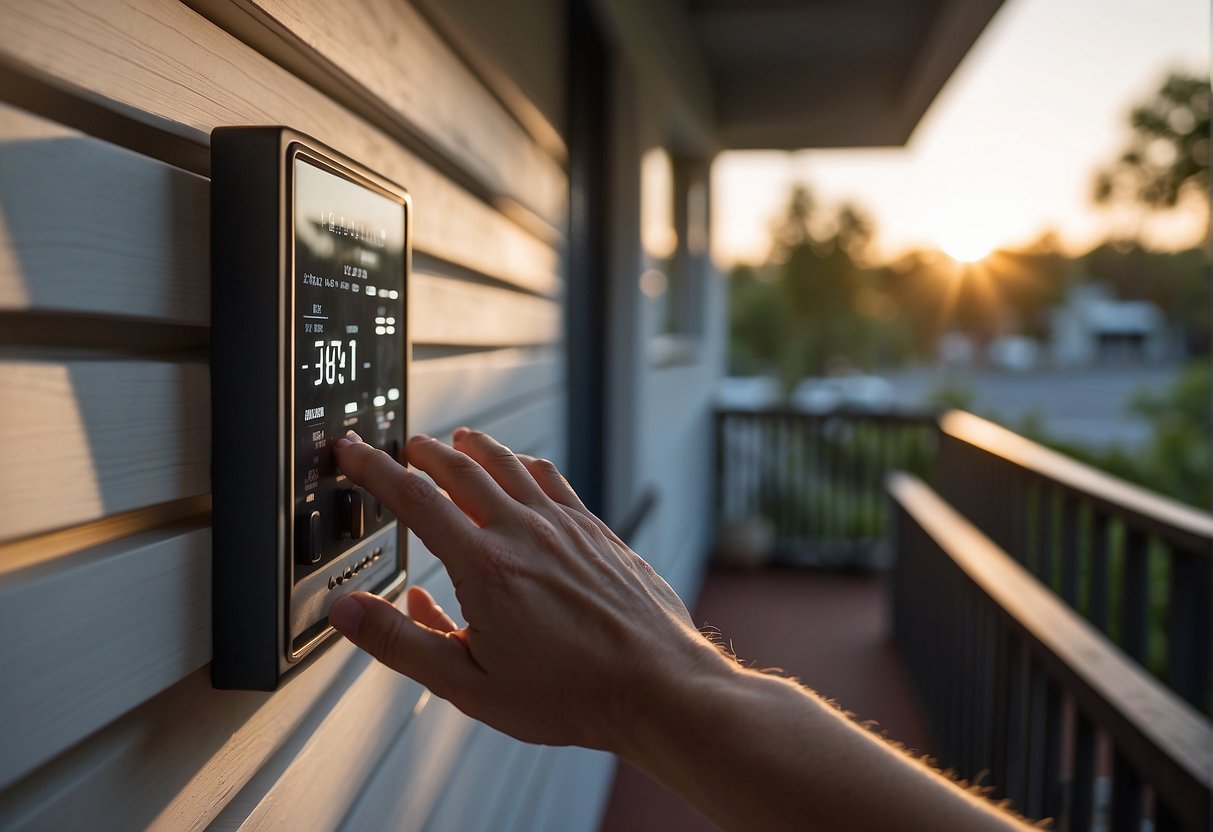
Programming On And Off Times
Start by deciding the exact times you want your lights to turn on and off. Most timers have easy-to-use buttons or dials—simply set the “on” time when it starts to get dark and the “off” time when you want the lights to go out.
Think about your daily routine. Do you arrive home around 6 pm? Set the lights to turn on a bit earlier to welcome you. Want them off by midnight? Adjust the timer accordingly so you’re not wasting electricity all night long.
Adjusting For Seasonal Changes
As seasons change, daylight hours shift dramatically. Your timer settings need to reflect this to keep your outdoor lighting effective. Check your timer monthly and tweak the on/off times so your lights come on just as it gets dark.
This simple habit keeps your home well-lit when you need it most without running your lights unnecessarily. Have you noticed how much earlier it gets dark in winter? Adjusting your timer prevents arriving home to a dark house during those months.
Using Manual Override
Manual override lets you control your lights instantly without changing the programmed schedule. This feature is handy when you’re having guests or want the lights off during a daytime outdoor event.
Using manual override won’t erase your timer settings—it just temporarily changes the light’s status. Have you ever needed light on during a sunny afternoon? This function puts you in control without hassle.
Maintaining Your Outdoor Timer
Maintaining your outdoor light timer is key to keeping your lights working well. Regular care helps avoid problems and extends the timer’s life. Simple checks and cleaning keep the timer reliable and safe.
Regular Cleaning
Dust and dirt can build up on the timer. Clean it often to keep it working smoothly. Use a soft, dry cloth to wipe the surface. Avoid water or strong cleaners that can damage the timer. Keep the area around the timer free from debris and leaves. This stops blockages and moisture from affecting the device.
Checking For Damage
Look at the timer for cracks or broken parts. Check the wiring and connections to ensure they are tight and secure. Damage can cause the timer to fail or become unsafe. Replace any worn or broken parts right away. This keeps your outdoor lights running without trouble.
Replacing Batteries
Many outdoor timers use batteries to keep settings during power outages. Check the battery status regularly. Replace batteries at least once a year or when the timer acts oddly. Use the correct battery type recommended by the manufacturer. This ensures the timer keeps time accurately and works as expected.
Credit: sleekspacedesigns.com
Troubleshooting Common Issues
Outdoor light timers can save energy and enhance security. Sometimes they do not work as expected. Troubleshooting common issues helps keep your lights on schedule. Understanding simple fixes saves time and frustration.
Timer Not Turning Lights On
Check if the timer is plugged in properly. Make sure the power source works. Confirm the timer settings match the current time and desired on-time. Reset the timer if needed. Inspect the fuse or circuit breaker for faults. Test the light bulb to ensure it is not burned out.
Lights Staying On All Night
Verify the timer’s off-time settings are correct. Clean the timer’s contacts to remove dust or corrosion. Check for stuck switches or buttons. Ensure the timer is not set to manual override mode. Replace the timer if it has internal damage. Confirm no wiring issues are causing a constant power flow.
Timer Display Problems
Look for dim or flickering display screens. Replace the timer’s batteries if it uses any. Reset the timer to clear errors. Inspect for water damage or dirt inside the timer. Avoid placing the timer in direct sunlight, which can affect the display. Consider replacing the timer if display problems persist.
Frequently Asked Questions
How Do I Program An Outdoor Light Timer?
To program an outdoor light timer, first set the current time on the timer. Then, select the on and off times. Follow the timer’s instructions carefully. Finally, plug in your outdoor light and test the settings to ensure proper operation.
What Types Of Outdoor Light Timers Are Available?
Outdoor light timers come in mechanical, digital, and smart types. Mechanical timers use dials, digital timers have LCD screens, and smart timers connect to Wi-Fi for remote control. Choose one based on your convenience and the complexity of your lighting needs.
Can Outdoor Light Timers Save Energy Effectively?
Yes, outdoor light timers save energy by turning lights off automatically. They prevent lights from staying on unnecessarily. This reduces electricity bills and extends bulb life. Timers also enhance security by controlling lighting schedules consistently.
How Do I Install An Outdoor Light Timer Safely?
Install the timer according to the manufacturer’s instructions. Ensure the timer and light fixture are rated for outdoor use. Turn off power before installation. Use waterproof covers for plugs and connections to protect against weather damage.
Conclusion
Setting an outdoor light timer saves energy and adds convenience. It keeps your home safe by turning lights on and off automatically. Timers are easy to set and adjust as needed. Choose the right timer for your light type and outdoor space.
Regularly check the timer to ensure it works well. Enjoy the comfort and security that a light timer brings. Simple steps lead to better lighting control. Start using a timer today for smarter outdoor lighting.