Are you tired of leaving your outdoor lights on all night or coming home to a dark yard? Putting a timer on your outdoor lights is a simple way to save energy, increase security, and add convenience to your daily routine.
Imagine never having to remember to turn your lights on or off again. You’ll discover easy steps to set up a timer that fits your needs perfectly. Keep reading to learn how to take control of your outdoor lighting and make your home safer and more energy-efficient.

Credit: www.aliontimer.com
Benefits Of Timed Outdoor Lighting
Timed outdoor lighting saves energy by turning lights on and off automatically. It also improves home security and adds convenience without manual effort. Setting a timer ensures lights run only when needed, reducing costs and extending bulb life.
Timed outdoor lighting offers multiple benefits that can enhance your home environment. From saving energy to boosting security, these lights provide practical solutions for everyday living. They also bring convenience and automation to your outdoor spaces, making life a bit easier.Energy Savings
Timed outdoor lights reduce energy consumption. They switch off automatically during daylight hours. This helps lower electricity bills. Reduced energy use is also better for the environment. With timers, you avoid lights being left on accidentally. This ensures efficient energy use without constant manual checks.Enhanced Security
Timed lights deter potential intruders. They create the illusion of someone being home. Lights automatically turn on during nighttime. This increases visibility around your property. Well-lit areas discourage unwanted guests. They make it harder for intruders to hide. Timed lighting adds an extra layer of security without effort.Convenience And Automation
Timers remove the hassle of manual switches. They automate your lighting schedule. You don’t need to worry about switching lights on or off. Timed systems adjust to daylight changes. This provides seamless lighting year-round. Enjoy illuminated outdoor spaces with minimal effort. Automation offers convenience, keeping your home welcoming and safe.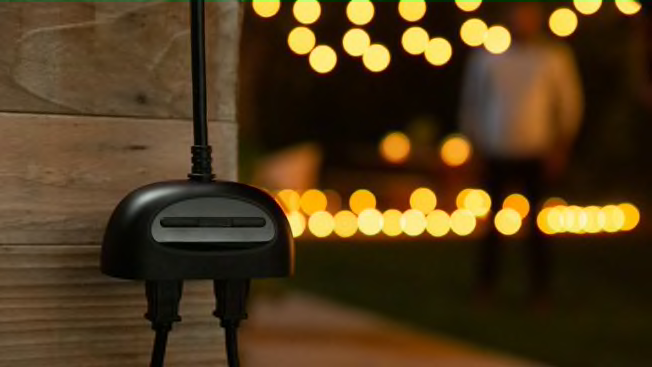
Credit: www.consumerreports.org
Types Of Timers For Outdoor Lights
Choosing the right timer for your outdoor lights can make a big difference in convenience and energy savings. Each type of timer offers unique features that suit different needs and budgets. Understanding these options helps you pick the best fit for your outdoor lighting setup.
Mechanical Timers
Mechanical timers are the simplest and often the most affordable option. They use a dial with pins or segments that you set to turn the lights on and off at specific times. These timers don’t require batteries or complex programming, making them easy to use for anyone.
One downside is that mechanical timers usually only allow for one or two on/off cycles per day. They also tend to be less precise than digital options. However, if you want a straightforward solution without fuss, mechanical timers can do the job well.
Digital Timers
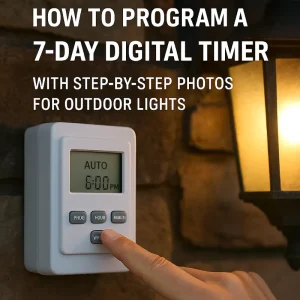
Digital timers offer more flexibility and accuracy than mechanical models. You can program multiple on/off cycles throughout the day and customize schedules for weekdays and weekends. Many digital timers also have backup batteries so your settings won’t be lost during power outages.
For example, you can set your porch light to turn on at dusk and off at midnight, then have your garden lights come on later in the evening. This level of control helps you tailor lighting exactly to your lifestyle. The setup may take a few minutes, but the results are worth it.
Smart Timers And Apps
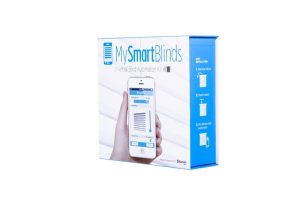
Smart timers connect to your Wi-Fi network and let you control outdoor lights from your smartphone or voice assistant. This means you can adjust schedules or switch lights on and off remotely, even when you’re not home. Some models also include motion sensors or ambient light detection.
Imagine leaving for vacation and still being able to turn your outdoor lights on and off to make it look like someone’s home. Smart timers often integrate with other smart home devices, creating a seamless and efficient system. Are you ready to take full control of your outdoor lighting with just a tap?
Choosing The Right Timer
Choosing the right timer for your outdoor lights can make a big difference in convenience and energy savings. It’s not just about picking any timer; it’s about finding one that fits your lighting setup and outdoor conditions perfectly. Let’s break down the key factors to consider so your lights turn on and off exactly when you want.
Compatibility With Lights
Start by checking the type of lights you have. Are they LED, incandescent, or solar-powered? Some timers only work with specific bulb types or wattage ranges.
For instance, LED lights use less power and may need a timer designed to handle low wattage. Using the wrong timer can cause flickering or even damage your lights.
Think about the total wattage your lights draw. If you have a string of bulbs, add up their wattage to ensure the timer can handle the load. Overloading a timer is a common mistake that can trip circuits or shorten the timer’s lifespan.
Weather Resistance
Since your timer will live outdoors, it must withstand rain, snow, and heat. Look for timers with a weather-resistant or waterproof rating like IP44 or higher.
I once installed a cheap indoor timer outside, and it failed after one rainy night. Investing a little more in a weatherproof timer saves you from replacing it often and keeps your lights running smoothly.
Consider timers with protective covers or enclosures to shield them from direct exposure. This extra layer helps during storms or harsh winters.
Ease Of Installation
You want a timer that’s simple to install without needing an electrician. Many outdoor timers plug directly into your outlet, so you just plug your lights into the timer.
Some models come with mounting options like hooks or screws to keep the timer secure on a wall or post. This prevents accidental unplugging or damage from wind.
Look for timers with clear instructions and intuitive controls. If setting the timer feels complicated, you’re less likely to use it correctly. Have you ever struggled with confusing dials or buttons? Choosing a user-friendly model saves frustration and time.
Step-by-step Timer Installation
Installing a timer on your outdoor lights saves energy and adds convenience. The process is simple and takes just a few steps. Follow these instructions carefully to set up your timer correctly and safely.
Gathering Necessary Tools
Prepare all tools before starting the installation. You will need:
- A timer compatible with outdoor use
- Screwdriver (flathead and Phillips)
- Wire strippers
- Electrical tape
- Voltage tester
- Wire connectors
- Ladder (if lights are high)
Turning Off Power Safely
Turn off the power to the outdoor lights at the circuit breaker. Use the voltage tester to confirm no electricity flows. Safety is crucial. Never work on live wires.
Connecting The Timer
Remove the existing outdoor light switch or plug. Connect the timer wires to the light wires using wire connectors. Match colors: black to black, white to white, and green or copper to ground. Secure connections with electrical tape. Mount the timer in a weatherproof box if required.
Setting The Timer Schedule
Follow the timer instructions to set the on and off times. Most timers have easy-to-use dials or digital controls. Choose times that fit your needs. Test the timer to ensure the lights turn on and off as planned.
Tips For Optimizing Timer Settings
Optimizing your outdoor light timer settings can make a big difference in energy savings and home security. Setting the timer correctly ensures your lights come on and off exactly when you need them. Let’s look at ways to fine-tune those settings for the best results.
Aligning With Sunset And Sunrise
Setting your timers based on actual sunset and sunrise times helps your lights run only when necessary. Many timers offer a “dusk to dawn” feature that automatically adjusts daily. This means your lights turn on at sunset and off at sunrise without you lifting a finger.
Check if your timer has this option or consider a smart timer with location settings. This way, you avoid wasting electricity by having lights on during daylight. Have you noticed how much brighter summer evenings last? Aligning with natural light changes saves you money and hassle.
Adjusting For Seasonal Changes
Sunset and sunrise times shift as the seasons change, so it’s important to update your timer settings regularly. If your timer doesn’t adjust automatically, set a reminder to update it every few weeks. This keeps your lights running only when needed.
For example, in winter, you might want your lights to turn on earlier and off later. In summer, shorter lighting periods can save energy. Have you ever left your lights on too long because you forgot to adjust the timer? Small tweaks prevent that.
Using Motion Sensors With Timers
Combining motion sensors with timers adds flexibility and security to your outdoor lighting. The timer controls when the system is active, and the motion sensor triggers lights only when movement is detected. This reduces unnecessary lighting.
This setup is perfect for areas where you want lights on only during certain hours but still need instant light when someone approaches. Think about your driveway or garden paths—motion sensors ensure lights are ready when you arrive. Could this combination improve your home’s energy efficiency and safety?
Troubleshooting Common Issues
Troubleshooting common problems with outdoor light timers can save time and frustration. Some issues stop the timer from working correctly. Simple checks can often fix these problems. Follow these tips to keep your lights running smoothly and on schedule.
Timer Not Turning Lights On Or Off
Check the timer settings first. The clock might be set to the wrong time. Also, verify the on and off times are programmed correctly. Some timers have a manual override switch that can stop automatic operation. Make sure this switch is in the correct position. Dirt or moisture in the timer’s socket can block connections. Clean and dry the timer and socket if needed.
Power Supply Problems
Ensure the power source is working. Test the outlet with another device. Loose or damaged power cords can cause issues. Replace any frayed or broken wires. Outdoor timers should be connected to weatherproof outlets. If the outlet is not weatherproof, moisture can cause shorts. Use a ground fault circuit interrupter (GFCI) outlet for safety and reliability.
Resetting The Timer
Resetting clears errors and restores default settings. Most timers have a small reset button or hole. Use a paperclip to press and hold the reset for a few seconds. After resetting, reprogram the timer carefully. This step fixes many common malfunctions. Keep the user manual handy for specific reset instructions.

Credit: www.aliontimer.com
Frequently Asked Questions
How Do I Set A Timer For Outdoor Lights?
To set a timer, plug your outdoor lights into a timer device. Program the timer to switch lights on and off at desired times. This saves energy and ensures lights operate automatically without manual effort.
Can I Use Smart Timers For Outdoor Lighting?
Yes, smart timers work well for outdoor lights. They allow remote control via apps and can be programmed for specific schedules. Smart timers offer convenience and energy efficiency by adjusting lighting based on your routine.
What Types Of Timers Are Best For Outdoor Lights?
Mechanical, digital, and smart timers are popular for outdoor lights. Digital and smart timers provide more precise control and flexibility. Choose a weatherproof timer designed specifically for outdoor use to ensure durability.
Are Outdoor Light Timers Energy Efficient?
Absolutely. Timers prevent lights from staying on unnecessarily, reducing electricity use. This not only saves money but also extends bulb life. Timers optimize outdoor lighting use for better energy management.
Conclusion
Setting a timer on outdoor lights saves energy and money. It also adds safety by lighting your home at night. Choose a timer that fits your needs and easy to use. Follow simple steps to install and program it. Check the timer regularly to keep it working well.
Enjoy bright, controlled outdoor lighting without hassle. Small changes make a big difference in your home’s comfort. Try it today and see the benefits yourself.