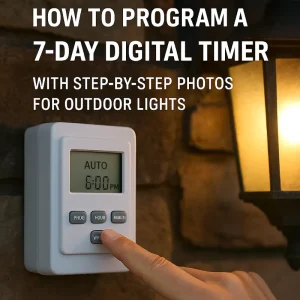
Are you tired of forgetting to turn your outdoor lights on or off? Imagine having your lights come on exactly when you want, without lifting a finger.
Programming a timer switch for your outdoor lights can make your home safer, save energy, and add convenience to your daily routine. In this guide, you’ll discover easy steps to set up your timer switch quickly and hassle-free. Keep reading to take control of your outdoor lighting and enjoy peace of mind every evening.
Choosing The Right Timer Switch
Choosing a timer switch for outdoor lights ensures energy savings and security. Programming it correctly sets your lights to turn on and off automatically. This simple step helps maintain a well-lit outdoor space without manual effort.
Choosing the right timer switch is crucial for outdoor lights. It ensures your lights operate efficiently, saving energy and providing security. With various options available, understanding the features and compatibility can make a difference.Types Of Timer Switches
Different timer switches offer unique functionalities. Manual timers require you to set the on and off times each day. Digital timers allow programming for specific days and times, offering more flexibility. Smart timers can be controlled through apps, providing remote access. Each type has its advantages depending on your needs.Compatibility With Outdoor Lights
Before purchasing a timer switch, check compatibility with your outdoor lights. Ensure the switch supports the voltage and wattage of your lights. LED lights may require specific timer switches due to their low energy use. Compatibility ensures optimal performance and prevents damage.Weatherproof Features
Outdoor conditions demand durable timer switches. Look for weatherproof features to withstand rain, snow, and extreme temperatures. A weather-resistant switch will last longer and maintain functionality. Ensure the switch is rated for outdoor use to protect your investment.
Credit: www.aliontimer.com
Tools And Materials Needed
Before you dive into programming your timer switch for outdoor lights, gathering the right tools and safety gear is crucial. Having everything at hand not only speeds up the process but also ensures you stay safe while working with electrical components. Let’s take a closer look at what you’ll need to get started effectively.
Basic Tools List
- Screwdriver Set:Both flathead and Phillips screwdrivers are essential for removing and securing switch plates and timer units.
- Wire Strippers:These help you strip the insulation from wires cleanly without damaging the metal inside.
- Voltage Tester:Never skip this—test the wires before touching them to make sure the power is off.
- Electrical Tape:Use this to insulate wire connections securely once the timer is installed.
- Needle-Nose Pliers:Helpful for bending wires and reaching tight spots during installation.
- Wire Nuts:These connect wires safely and keep them from coming loose over time.
Having these tools ready means you won’t have to pause mid-way to look for something. It also helps you work more confidently knowing you have the right equipment.
Safety Equipment
- Insulated Gloves:Protect your hands from accidental electrical shocks while handling wiring.
- Safety Glasses:Shield your eyes from any sparks or debris that might occur when working near electrical fixtures.
- Non-Conductive Ladder:If your outdoor lights are mounted high, use a ladder made of fiberglass or wood to avoid conducting electricity.
- Flashlight or Headlamp:Working in dim light or during the evening can be risky—good lighting keeps you safe and precise.
Safety gear isn’t just a good idea; it’s a must-have. Have you ever underestimated the importance of gloves or glasses on a quick electrical job? The right protection can prevent injuries that might set your project back significantly.
Preparing For Installation
Preparing for the installation of a timer switch for your outdoor lights is key to a smooth and safe setup. Before diving into wiring or mounting, you need to ensure your environment and tools are ready. This preparation not only saves time but also protects you from potential hazards.
Turning Off Power
Safety starts with turning off the power at the circuit breaker. This step is non-negotiable and protects you from electric shocks. Even if you think the wires are inactive, always double-check with a voltage tester before touching anything.
Have you ever underestimated this step? Many DIYers skip it, leading to dangerous accidents. Taking a moment here means you can work confidently and focus on the job.
Locating Existing Wiring
Next, find the wiring that controls your outdoor lights. This often means removing the switch plate or accessing the light fixture itself. Knowing exactly where the wires run helps avoid guesswork and reduces the risk of cutting into the wrong cable.
Use a wire tracer or flashlight if the wiring isn’t immediately visible. Pay attention to wire colors—typically black for hot, white for neutral, and green or bare for ground. This knowledge is crucial for connecting your timer switch correctly.
Reading Manufacturer Instructions
Every timer switch can have its own quirks, so reading the manufacturer’s instructions thoroughly is important. Don’t just skim; understand the wiring diagrams and any specific installation notes they provide.
Instructions often include helpful tips based on the model’s design, such as the type of screws to use or programming steps after installation. Have you noticed how skipping this part can lead to frustrating trial and error? Taking time here can save you from that hassle.

Credit: www.reddit.com
Installing The Timer Switch
Installing a timer switch for outdoor lights lets you control lighting automatically. This saves energy and adds convenience. The process involves removing the old switch, wiring the new timer, and securing it properly. Follow these steps carefully for a safe and effective installation.
Removing Old Switch
First, turn off the power at the circuit breaker. Use a voltage tester to confirm the power is off. Remove the switch cover plate with a screwdriver. Unscrew the old switch from the wall box. Carefully pull the switch out to expose the wires. Note how the wires connect to the switch for reference.
Wiring The Timer Switch
Match the timer switch wires with the existing wires in the wall box. Typically, wires include line (power), load (light), neutral, and ground. Connect the wires using wire nuts, twisting them tightly. Follow the instructions provided with the timer switch. Double-check all connections to avoid loose wires. Keep wires neat and organized inside the box.
Securing The Switch In Place
Push the wired timer switch back into the wall box carefully. Align it with the screw holes. Use screws to fasten the switch securely. Avoid over-tightening to prevent damage. Attach the switch cover plate. Restore power at the circuit breaker. Test the timer switch to ensure it works correctly.
Programming The Timer Switch
Programming the timer switch is simple and saves energy by controlling outdoor lights. Proper setup ensures lights turn on and off automatically. This section guides you through setting the current time, scheduling on/off times, and using manual override.
Setting Current Time
Start by pressing the clock or time button on the timer. Use the arrow keys to adjust hours and minutes. Make sure to set AM or PM correctly. Confirm the time by pressing the clock button again. The timer now knows the current time to work properly.
Configuring On And Off Times
Press the program or set button to enter schedule mode. Choose the on-time by adjusting hours and minutes. Save the on-time by pressing the program button again. Repeat the process to set the off-time. Most timers allow multiple on/off schedules for flexibility.
Using Manual Override
The manual override lets you turn lights on or off without changing the schedule. Press the override or manual button to switch between automatic and manual mode. This feature is useful during unexpected events or when you want lights on longer. Remember to switch back to automatic mode for normal operation.
Testing And Troubleshooting
After setting up your timer switch for outdoor lights, testing and troubleshooting are key to ensuring everything works smoothly. Skipping this step might leave you with lights that never turn on or off at the right time, defeating the whole purpose of the timer. Let’s look at how you can verify your timer’s function and fix common issues that may arise.
Verifying Timer Function
Start by manually overriding the timer to check if the lights respond immediately. If the lights turn on and off as expected, your wiring is likely correct and the timer is receiving power.
Next, observe the timer through a full cycle. Does it switch the lights on and off at the programmed times? Watch closely—sometimes timers have a delay of a few minutes before activating.
Test the timer during both daylight and nighttime settings. Some timers include a dusk-to-dawn sensor that only activates in low light. If your lights don’t turn on at night, this could be why.
Common Issues And Fixes
- Lights won’t turn on or off:Double-check your timer’s programming. Incorrect AM/PM settings or wrong days can cause this. Reset the timer and reprogram carefully.
- Timer shows no power:Ensure the circuit breaker is on and the timer is correctly wired. A loose connection or tripped breaker often causes power issues.
- Lights flicker or behave erratically:This might be caused by incompatible bulbs or a faulty timer. Try replacing bulbs with LED ones recommended by your timer’s manufacturer.
- Timer skips scheduled cycles:Dust or moisture inside the timer can interfere with its mechanics. Clean the device gently and consider installing a weatherproof cover.
Have you ever struggled with a timer that just wouldn’t cooperate? Most often, a simple reset or recheck of the settings solves the problem. Don’t hesitate to consult your timer’s manual—it can save you hours of guesswork.
Maintenance Tips
Keeping your timer switch for outdoor lights in good shape ensures it works perfectly when you need it most. Regular maintenance helps prevent unexpected failures and extends the life of your device. Let’s look at some simple yet effective maintenance tips you can do yourself.
Regular Checks
Check your timer switch at least once a month. Look for any signs of wear, such as loose wires or corrosion around the terminals.
Test the timer by manually turning it on and off to confirm it’s functioning correctly. If you notice any flickering lights or delays, it might be time to replace the timer or its batteries.
Keeping a small notebook or setting reminders on your phone can help you stay consistent with these checks. Have you noticed any unusual behavior in your outdoor lights lately?
Protecting From Weather Damage
Outdoor timer switches face rain, snow, and extreme temperatures. Protect your device by installing it inside a waterproof box or cover designed for electrical components.
Seal any gaps with weatherproof silicone to prevent moisture from entering. Make sure the cover doesn’t block ventilation, as overheating can also damage the timer.
Consider using timers rated for outdoor use; they are built to handle tough weather conditions better than indoor models. How well is your timer shielded against the elements right now?

Credit: www.aliontimer.com
Frequently Asked Questions
How Do I Set A Timer Switch For Outdoor Lights?
To set a timer switch, first turn off the power. Then, follow the switch’s manual to program on/off times. Usually, you press buttons to set current time and schedule. Finally, restore power and test the timer to ensure it works correctly.
Can I Program A Timer Switch Without Professional Help?
Yes, most timer switches come with easy-to-follow instructions. Basic knowledge of electrical safety is essential. Always turn off power before installation. Many models have user-friendly digital displays, making programming simple for homeowners without technical skills.
What Is The Best Time To Schedule Outdoor Lights?
The best time depends on your needs. Typically, set lights to turn on at dusk and off at dawn. This saves energy and enhances security. Adjust timing seasonally, as sunset and sunrise times change throughout the year.
Are Timer Switches Compatible With Led Outdoor Lights?
Most modern timer switches are compatible with LED lights. Check the switch specifications for LED support. Using compatible switches ensures proper operation and prevents flickering or damage to your LED fixtures.
Conclusion
Programming a timer switch for outdoor lights saves energy and time. It keeps your home safe and well-lit at night. Setting the timer is simple with clear steps. You can adjust the timing to fit your needs. Enjoy the convenience of lights turning on and off automatically.
No more worries about forgetting to switch them off. A small effort leads to better security and comfort. Try it today to see the difference it makes.