
Are you planning to replace or upgrade your kitchen faucet but unsure how to measure it correctly? Getting the right size is crucial to avoid leaks, ensure a perfect fit, and keep your kitchen looking great.
You’ll learn simple, step-by-step methods to measure your kitchen faucet like a pro. By the end, you’ll feel confident making the right choice without any guesswork. Keep reading to make sure your next faucet fits perfectly and works flawlessly.

Credit: helika-sinks.com
Preparation For Measurement
Before you measure your kitchen faucet, setting up the right environment makes the process smoother and more accurate. Preparation helps avoid mistakes and saves time. It’s about having everything ready and making sure your workspace is clear.
Gather Necessary Tools
Make sure you have the right tools before you start measuring. A tape measure is essential, preferably one with both inches and centimeters. You might also need a ruler, a notebook to jot down measurements, and a flashlight to see hard-to-reach areas.
Having these tools on hand will speed up the process and prevent interruptions. Think about what you used the last time you measured something—did you wish you had another tool? Now is the time to prepare it.
Clean The Sink Area
Clear the sink and faucet area thoroughly before taking measurements. Dirt, grime, or clutter can block your view or get in the way of accurate measuring. Wipe down the faucet and surrounding surface with a damp cloth to remove any buildup.
Cleaning also gives you a chance to inspect the faucet for damage or leaks that might affect measurements. A clean workspace helps you focus and reduces the chance of errors. Have you noticed how much easier tasks feel when your area is tidy?

Credit: www.cliqstudios.com
Measuring Faucet Dimensions
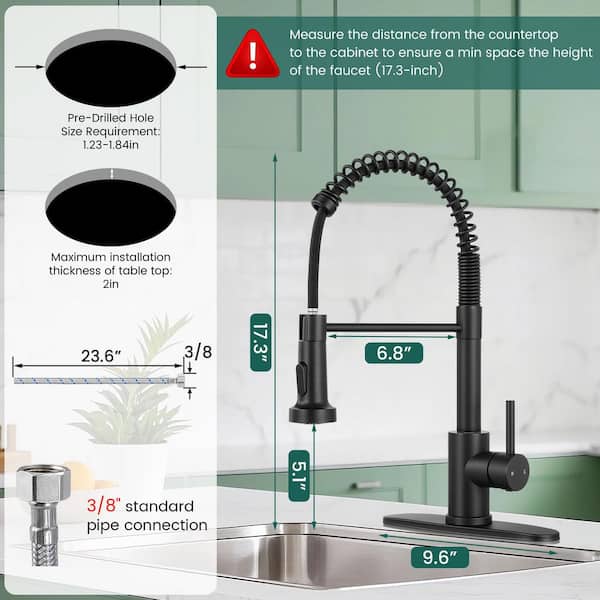
Measuring faucet dimensions is essential before buying or installing a kitchen faucet. Precise measurements ensure the faucet fits well and works properly. Focus on three main dimensions: height, spout reach, and base diameter. Each dimension affects the faucet’s usability and compatibility with your sink and countertop.
Height Measurement
Height refers to the distance from the base to the highest point of the faucet. Use a tape measure or ruler to get this number. Measure straight up from the bottom where the faucet attaches to the sink. This helps avoid buying a faucet too tall for your kitchen space.
Spout Reach Measurement
Spout reach is the horizontal distance from the faucet base to the spout’s tip. It determines how far water flows into the sink. Measure from the center of the faucet base to the end of the spout. This ensures the water lands in the middle of the sink basin.
Base Diameter Measurement
Base diameter is the width of the faucet where it meets the sink or countertop. Use a ruler or tape measure to check this size. Knowing the base diameter helps confirm the faucet fits the hole size on your sink. Measure across the widest part of the base for accuracy.
Assessing Sink And Counter Space
Assessing the sink and counter space is vital before measuring a kitchen faucet. This step ensures the faucet fits well and works efficiently. Knowing the space available helps avoid mistakes and extra costs.
Measure the sink and counter carefully. Check the width, depth, and the number of holes on the sink. Also, note any obstructions like soap dispensers or water filters that may affect faucet placement.
Sink Size Compatibility
Check the sink’s size to match the faucet’s dimensions. The faucet should not be too tall or wide for the sink. A large faucet on a small sink can cause splashing and inconvenience.
Measure the sink bowl width and depth. Compare these with the faucet’s spout reach and height. The spout should reach near the center of the sink bowl for easy use.
- Measure sink width and depth in inches or centimeters.
- Note the number of faucet holes and their spacing.
- Ensure faucet spout length fits within the sink bowl.
- Confirm faucet height does not block cabinets or shelves above.
Counter Space Evaluation
Look at the counter space around the sink. The faucet base needs enough room for installation. Check for any nearby edges or raised backsplashes that can limit space.
Measure the counter depth and width near the sink. Mark the faucet hole positions. Check if the faucet handle can move freely without hitting walls or appliances.
- Measure counter depth from front edge to backsplash.
- Check the distance between sink edge and counter edge.
- Ensure faucet handles have enough room to turn fully.
- Consider space for additional features like pull-out sprayers.
Identifying Mounting Type
Identifying the mounting type of your kitchen faucet is a crucial step before purchasing or installing a new one. It ensures compatibility with your sink and prevents costly mistakes. Understanding the different mounting styles helps you visualize how the faucet attaches, and can save you time and effort during installation.
Single-hole Faucets
Single-hole faucets need just one hole in your sink or countertop. They combine the spout and handles into one unit, making them easy to install and clean around. Many modern kitchens use this style because of its sleek look and simplicity.
To identify a single-hole faucet, count the holes in your sink. If there’s only one, this is your mounting type. Think about your kitchen’s space—single-hole faucets work well in compact areas or with accessories like soap dispensers nearby.
Multi-hole Faucets
Multi-hole faucets use two, three, or even four holes in the sink or countertop. These faucets usually have separate handles for hot and cold water. They offer more flexibility in design but require more precise measurements to fit correctly.
Check how many holes your sink has and their spacing. Common setups include three holes spaced 4 or 8 inches apart. Have you noticed if your current faucet’s handles sit directly on the sink or countertop? That detail helps you choose the right multi-hole faucet.
Considerations For Water Supply Lines
Water supply lines connect your kitchen faucet to the main water source. Their size, length, and type affect faucet installation and performance. Measuring these lines carefully helps avoid leaks and fitting issues. Pay close attention to details before buying a new faucet.
Check Line Length
Measure the length of the existing supply lines from the shutoff valve to the faucet connection. Use a tape measure for accuracy. Supply lines that are too short or too long cause installation problems. Note the length in inches or centimeters.
Remember, flexible supply lines come in various lengths. Choose lines that reach without stretching or bending sharply. This ensures smooth water flow and prevents damage over time.
Evaluate Line Connection Types
Identify the connection types on both ends of the supply lines. Common types include compression fittings, threaded connections, and quick-connect fittings. Check the faucet manufacturer’s instructions for compatible connection types.
Match the supply line connectors to the faucet and shutoff valves. Using adapters may be necessary if connections do not match. Proper connections avoid leaks and make installation easier.
Tips For Accurate Measurement
Getting the right measurement for your kitchen faucet is more important than you might think. Accurate measurements save you from buying a faucet that won’t fit or look right. Let’s dive into some tips that make measuring easier and more precise, so you avoid costly mistakes and frustration.
Double-check Measurements
After you take your initial measurements, don’t just assume they’re correct—measure again. Small errors can add up and cause big problems when installing your faucet. Use a tape measure that’s easy to read and hold it steady to avoid slipping.
Try measuring from different angles to confirm your numbers. For instance, measure the distance between mounting holes twice—once from the front and once from the back. This can help you catch any hidden misalignments.
Consult Manufacturer Guides
Every faucet brand has its own set of specifications, so don’t ignore the manufacturer’s installation guide. These guides often include detailed diagrams and exact measurements you need to compare with your own.
If you’re unsure about a measurement, the guide can clarify where to measure and how to interpret those numbers. It’s like having a blueprint for your new faucet, ensuring it fits perfectly in your space.
Troubleshooting Common Issues
Measuring your kitchen faucet might seem straightforward, but common issues can make the task tricky. These challenges often arise from limited space or unusual faucet designs that don’t fit standard measurement methods. Understanding how to navigate these obstacles ensures you get accurate results and avoid costly mistakes.
Dealing With Tight Spaces
Small or cramped areas under your sink can make it hard to measure your faucet properly. You might struggle to fit a tape measure or ruler into the narrow space behind the faucet base.
Try using a flexible measuring tape or a string to reach those hard-to-access spots. Mark the string where it meets the measurement points, then measure the string with a ruler outside the tight space.
Have you noticed how awkward angles can throw off your measurements? Position yourself comfortably, and use a flashlight to see clearly. Sometimes, measuring from multiple angles and averaging the numbers helps increase accuracy.
Handling Unconventional Designs
Faucets with unusual shapes or extra features like pull-out sprayers or multi-handle controls can confuse your measuring efforts. Standard measurement points might not apply, so you’ll need to adapt.
Focus on these key areas:
- Base width:Measure the widest part where the faucet attaches to the sink or countertop.
- Spout reach:Measure from the center of the base to the spout’s furthest point.
- Spout height:Measure from the base to the highest point of the spout.
Ask yourself which measurements matter most for your installation or replacement needs. Sometimes, ignoring the less common features and concentrating on these basics can save time and reduce confusion.
Credit: www.homedepot.com
Frequently Asked Questions
How Do I Measure The Height Of A Kitchen Faucet?
To measure faucet height, use a tape measure from the base to the highest point. This helps ensure proper fit under cabinets and above sinks.
What Is The Standard Kitchen Faucet Spout Reach?
Standard spout reach ranges between 8 to 10 inches. Measure from the faucet base center to the spout’s tip to match sink size.
How To Measure Faucet Base Diameter Accurately?
Measure the diameter of the faucet base where it sits on the sink. This ensures compatibility with existing sink holes and mounting space.
Why Measure Faucet Hole Size Before Replacement?
Measuring hole size avoids purchasing incompatible faucets. Measure the diameter of existing sink holes for correct faucet installation.
Conclusion
Measuring your kitchen faucet is simple with the right steps. Always check the height, spout reach, and mounting holes. Accurate measurements help avoid mistakes and fit issues. Take your time and use a tape measure carefully. This will save you money and effort later.
Now, you can choose the best faucet that suits your kitchen perfectly. Measuring right means a smooth installation and a great look. Keep these tips in mind for your next kitchen upgrade. Easy and accurate measuring makes all the difference.






