Drilling a straight hole can be tricky, especially if you don’t have a drill press. You might have tried and ended up with crooked holes that ruin your project.
But what if you could learn simple tricks to drill perfectly straight holes every time, using just your handheld drill? You’ll discover easy, practical tips that will save you time, frustration, and costly mistakes. Keep reading, and you’ll gain the confidence to tackle your drilling tasks like a pro—even without fancy equipment.
Credit: www.protoolreviews.com
Choosing The Right Tools
Choosing the right tools is key to drilling a straight hole without a drill press. The tools affect the precision and ease of the job. Using proper equipment reduces mistakes and keeps your project neat.
Focus on two main items: the drill bit and the hand drill. Both must be suited for the task. Selecting the best tools improves control and helps maintain a straight line.
Selecting The Right Drill Bit
Pick a drill bit that matches your material. Wood, metal, and plastic need different bits. Choose bits designed to cut smoothly and stay sharp longer.
- Twist bits work well for wood and metal.
- Brad point bits give precise starts on wood surfaces.
- Spade bits create larger holes but need careful handling.
Check the size carefully. A slightly smaller bit helps guide the hole straight. Avoid dull bits as they wander and cause damage.
Importance Of A Quality Hand Drill
A steady hand drill is vital for straight holes. Cheap drills often wobble or lose power. Choose a drill with a comfortable grip and smooth rotation.
- Look for drills with adjustable speed settings.
- Battery-powered drills offer better control for small jobs.
- Ensure the chuck holds bits tightly to avoid slipping.
A good hand drill reduces wobbling and keeps the bit aligned. This leads to cleaner, straighter holes without extra effort.
Marking Your Drilling Spot
Marking your drilling spot accurately is the foundation of drilling a straight hole without a drill press. If your mark is off, the drill bit can wander, making the hole crooked or uneven. Taking a little extra time to mark precisely saves you frustration and improves the quality of your work.
Using A Center Punch
A center punch creates a small dent where you want to drill, giving the drill bit a starting point. This dent prevents the bit from slipping off the mark as soon as you start drilling.
Hold the punch firmly on your marked spot and tap it lightly with a hammer. The dent doesn’t need to be deep—just enough to guide the drill bit.
Have you ever tried drilling on a smooth surface and found the bit sliding away? Using a center punch can solve that problem immediately.
Creating A Guide Line
Sometimes a single point isn’t enough, especially if you need the hole perfectly aligned along a certain angle. Drawing a guide line helps you keep your drill steady and straight.
Use a ruler or a square to draw a thin, straight line through the center of your marked spot. This line acts as a visual reference to keep your drill aligned as you work.
Try starting your drill at the edge of the guide line, then slowly move the bit down the line. This technique helps maintain a consistent angle and direction.
Creating A Drill Guide
Drilling a perfectly straight hole without a drill press can feel like a challenge. Creating a drill guide is a smart way to keep your drill steady and accurate. A guide helps control the angle and depth, reducing mistakes and frustration.
Using A Block Of Wood
A simple block of wood can be your best friend for guiding a drill. Choose a piece thick enough to hold the drill bit straight as you work.
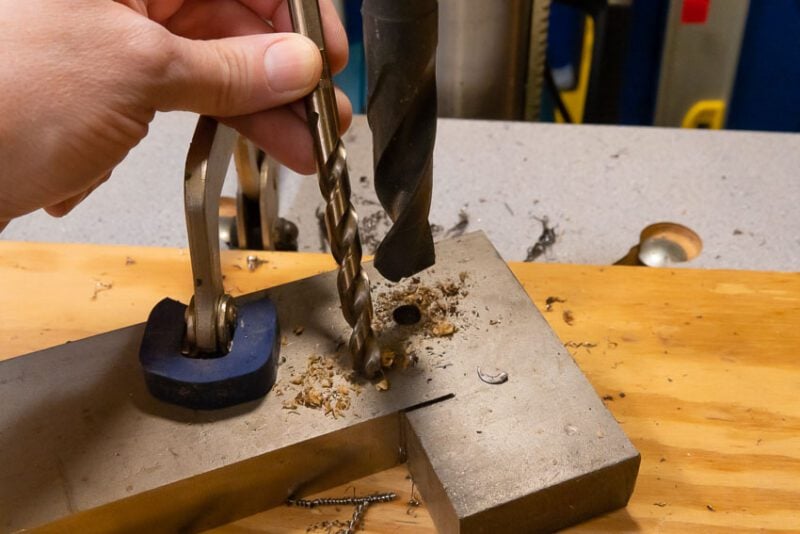
Drill a hole through the block that matches your desired hole size. This hole acts as a sleeve, keeping your drill bit aligned as you push it through your workpiece.
Clamp the block firmly on top of your material. This prevents any slipping that could throw off your angle. You’ll find it much easier to drill straight when the bit moves only within the block’s guide hole.
Adjustable Angle Guides
If you need precise angles, adjustable angle guides are a great option. These devices let you set the exact tilt and lock it in place.
You can make a simple adjustable guide using a protractor and a small clamp. Attach the clamp to your workpiece and align the protractor arm to the angle you need.
Once set, use the guide as a reference while drilling. This helps keep the drill bit from wandering off angle, especially when drilling at slants or unusual positions.
Maintaining Proper Drill Technique
Drilling a straight hole without a drill press demands more than just steady hands. Maintaining proper drill technique is essential to keep your hole perfectly aligned and prevent damage to your material or drill bit. Let’s focus on two critical aspects: controlling your drill speed and applying consistent pressure.
Controlling Drill Speed
Adjusting your drill speed affects both accuracy and finish quality. Too fast, and you risk overheating the bit or wandering off course. Too slow, and the drill may bind or create rough edges.
Start at a moderate speed, especially when beginning the hole. This gives you control and helps the bit bite in straight. If you notice the drill bit slipping, slow down rather than pushing harder.
Think about the material you’re working with. Softer woods allow faster speeds, while metals and hardwoods need slower, steady pacing. Have you ever tried rushing through the hole only to realize it’s crooked? Slowing down can save you from that frustration.
Applying Consistent Pressure
Pressure is your friend, but only when it’s steady and even. Too much pressure can bend the bit or push it off angle. Too little, and the bit won’t cut properly, causing wobbling or uneven holes.
Hold the drill firmly and push straight down with balanced force. Imagine pressing just enough to keep the bit engaged without forcing it. If you feel the bit struggling or stalling, ease up slightly and let the drill do the work.
Consistency matters more than strength. Think about how you feed your drill—are you pushing harder on one side or shifting your weight? Those small changes can throw off your hole’s straightness.
Checking Your Progress
Checking your progress while drilling ensures the hole stays straight and accurate. It helps catch mistakes early. This saves time and material. Regular checks avoid uneven or crooked holes, which are hard to fix later.
Using A Straight Edge
Place a straight edge along the drill bit and workpiece. This shows if the bit leans to one side. Move the bit slowly and watch its alignment with the straight edge. Adjust your angle if the bit drifts away from the edge. A ruler or a level can work as a straight edge.
Adjusting For Errors
Stop drilling if you see the hole going off course. Pull the drill out carefully to avoid damaging the material. Realign the drill bit with the correct angle. Use your hand to steady the drill before continuing. Small corrections keep the hole straight and smooth.

Credit: www.facebook.com
Safety Precautions
Drilling a straight hole without a drill press requires careful attention to safety. Taking the right precautions protects you and ensures better results. Always prepare your workspace and tools before starting. Safety helps prevent accidents and keeps your project on track.
Wearing Protective Gear
Always wear safety glasses to protect your eyes from debris. Use hearing protection if the drill is loud. Wear gloves to keep your hands safe but avoid loose gloves that can catch in the drill. A dust mask helps if you are drilling materials that create dust. Dress in close-fitting clothes to avoid anything catching on the drill.
Securing The Workpiece
Clamp the workpiece firmly to a stable surface. This stops movement and ensures a straight hole. Avoid holding the piece by hand. Use a vice or clamps designed for woodworking or metalworking. Check the clamps before drilling to make sure they hold tight. A steady workpiece reduces mistakes and improves safety.

Credit: www.instagram.com
Frequently Asked Questions
How Can I Drill A Straight Hole Without A Drill Press?
Use a drill guide or a square clamped to the workpiece. This helps keep the drill bit perpendicular and steady.
What Tools Help Drill Straight Holes Manually?
A drill guide, carpenter’s square, or a homemade jig can ensure accuracy. These tools stabilize the drill and guide the bit straight.
How Do I Prevent Drill Bit Wobbling When Drilling Freehand?
Hold the drill firmly with both hands and start slowly. Using a sharp bit also reduces wobble for straighter holes.
Can I Use A Clamp To Drill Straight Holes?
Yes, clamping the workpiece securely prevents movement. Combine clamps with a guide for the best straight-hole results.
Conclusion
Drilling a straight hole without a drill press is doable with care. Use guides or clamps to keep the drill steady. Take your time and check your angle often. Practice on scrap wood to build confidence. Small steps lead to better results and less frustration.
Soon, you will create neat, straight holes with ease. Keep tools sharp and work space clean for best results. Stay patient and focused throughout the process. This skill saves time and money on simple projects.