Are your ceiling fan blades covered in dust and grime? That sticky layer not only looks bad but can also affect how well your fan works.
Cleaning your fan blades might seem like a hassle, but with the right steps, it’s easier than you think. In this post, you’ll discover simple, effective ways to get your fan blades spotless and keep your room feeling fresh. Keep reading, and you’ll be amazed at how quickly your fan can look and work like new again.
Preparation
Before you start cleaning your ceiling fan blades, proper preparation makes the task easier and safer. Taking the time to prepare helps you avoid messes and accidents that could happen if you jump in unprepared. Let’s break down what you need to do before you grab your cloth and cleaner.
Gather Cleaning Supplies
Start by collecting all the cleaning supplies you’ll need in one spot. This saves you from running around mid-cleaning and losing focus.
- A sturdy ladder or step stool to reach the fan blades comfortably.
- A microfiber cloth or a soft brush to trap dust without spreading it around.
- All-purpose cleaner or a mixture of water and mild soap for wiping down the blades.
- Optional: An old pillowcase to cover the blades and catch dust as you clean.
I once cleaned a fan without gathering supplies first and ended up using paper towels that left lint everywhere. Having the right tools upfront will save you time and frustration.
Ensure Safety Measures
Your safety should come first before tackling any ceiling fan cleaning. Make sure the fan is turned off and the blades have completely stopped spinning.
Use a stable ladder or step stool that supports your weight well. Avoid standing on chairs or unstable furniture, as slipping could cause serious injuries.
Consider turning off the circuit breaker if you need extra peace of mind. Have someone nearby if possible, especially when working on higher ceilings. What precautions do you take to keep yourself safe during household chores?
Dust Removal
Dust buildup on ceiling fan blades reduces air quality and fan efficiency. Removing dust regularly keeps fans clean and working well. It also prevents allergens from spreading in your home. Use simple tools to remove dust safely and quickly.
Use A Microfiber Cloth
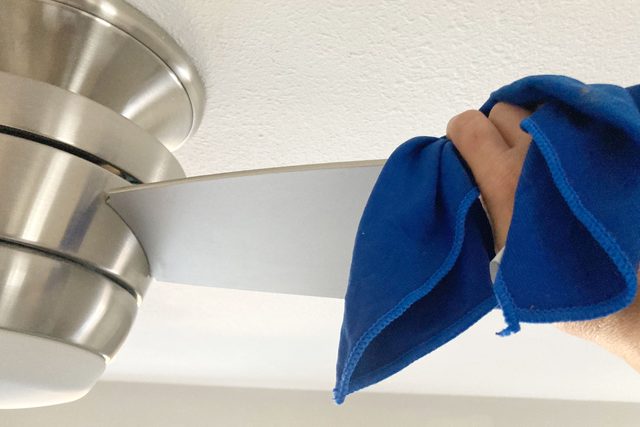
Microfiber cloths trap dust without spreading it around. They are soft and safe for fan blade surfaces. Wrap the cloth around each blade and wipe gently. This removes dust without scratching. For thick dust, dampen the cloth slightly with water. Avoid using harsh cleaners that can damage the finish.
Vacuum Techniques
A vacuum cleaner with a brush attachment works well for dust removal. It sucks up dust instead of moving it into the air. Use the brush to gently clean each blade’s top and bottom. Hold the blade steady to avoid bending it. This method is fast and reduces mess during cleaning.
Deep Cleaning
Deep cleaning your ceiling fan blades goes beyond just dusting. It removes built-up grime and allergens that simple wiping can’t tackle. This thorough approach not only improves air quality but also extends the life of your fan.
Using Soap And Water
Soap and water is a straightforward solution for deep cleaning fan blades. Start by mixing a few drops of mild dish soap with warm water in a bucket.
Dip a soft cloth or sponge into the soapy water and wring it out well to avoid dripping. Gently wipe each blade, paying close attention to the edges where dust tends to accumulate.
If you have stubborn spots, let the damp cloth sit on the area for a minute before wiping. After cleaning, use a dry cloth to remove any moisture to prevent warping or damage.
Natural Cleaning Solutions
Natural cleaning solutions offer a safe and eco-friendly way to deep clean fan blades. A popular mix is equal parts white vinegar and water, which cuts through grease and dust effortlessly.
Spray the solution lightly onto a microfiber cloth and wipe each blade carefully. Avoid spraying directly on the blades to protect the motor and electrical parts.
Adding a few drops of essential oil, like lemon or eucalyptus, to the vinegar mix can leave your fan smelling fresh and clean. Have you tried natural cleaners in your home chores before? They often surprise you with their effectiveness.
Credit: www.familyhandyman.com
Hard-to-reach Areas
Cleaning the hard-to-reach areas of your ceiling fan is essential to keep it running smoothly and looking great. These spots often collect dust and grime that can affect the fan’s efficiency and your room’s air quality. Tackling these tricky parts requires a bit of care and the right approach to avoid damage and ensure thorough cleaning.
Cleaning Motor Housing
The motor housing is often overlooked but can gather dust that affects performance. Use a soft brush or a microfiber cloth to gently wipe the exterior. Avoid using water or liquid cleaners directly on the motor to prevent damage.
For stubborn dust, a vacuum with a brush attachment works well. Be careful not to press too hard, which could loosen parts. Have you noticed your fan making noise? Dust inside the motor housing might be the cause.
Addressing Ceiling Mounts
Ceiling mounts can trap cobwebs and dust, especially in corners and crevices. Use a long-handled duster or a cloth wrapped around a ruler to reach these spots. A flashlight can help you spot hidden dirt.
Ensure the fan is turned off before you start, and be gentle to avoid loosening screws or damaging the mount. Have you checked your ceiling mount recently? It might be time to give it a quick clean to maintain stability and appearance.
Maintaining Cleanliness
Keeping your ceiling fan blades clean is more than just a chore—it impacts the air quality and efficiency of your fan. Dust and grime build-up not only dulls the look of your fan but can also spread allergens around your room. Staying on top of cleanliness helps your fan work better and keeps your living space fresher.
Regular Dusting Routine
Dust your fan blades at least once a week to prevent heavy build-up. Use a microfiber cloth or a duster designed for ceiling fans to trap dust instead of just pushing it around. If you want to avoid dust falling on your furniture or floor, place a sheet or newspaper underneath before you start.
Try using a pillowcase to clean each blade—it’s surprisingly effective. Slip the pillowcase over the blade and pull it back slowly, wiping off dust inside the fabric. This method keeps dust contained and your cleaning process less messy.
Seasonal Deep Cleaning
Every few months, give your ceiling fan a thorough cleaning to remove stubborn dirt and grease. First, turn off the fan and let it stop completely. Then, mix a mild detergent with warm water and dip a soft cloth in the solution.
Wipe each blade carefully, paying attention to edges and the motor housing. Avoid soaking the blades; damp cloths work best to prevent damage. After cleaning, dry the blades with a clean towel to avoid streaks and water spots.
Have you noticed how a clean fan seems to circulate air better? Imagine the difference in your room’s atmosphere after a deep clean. Maintaining this habit can improve your comfort and even reduce dust allergies over time.

Credit: www.amazon.ca
Tips And Tricks
Cleaning ceiling fan blades can be tricky without the right approach. Simple tips and tricks help make the process safer and more effective. These ideas save time and prevent damage to your fan. Follow these guidelines for a cleaner fan and better air quality.
Avoiding Common Mistakes
- Never use water directly on the motor or electrical parts.
- Skip harsh chemicals that can damage blade finishes.
- Avoid standing on unstable chairs or surfaces while cleaning.
- Do not ignore safety precautions like turning off the fan power.
- Resist wiping dust onto the floor; use a cloth to catch it.
Enhancing Fan Longevity
- Clean blades regularly to reduce dust buildup and imbalance.
- Use a microfiber cloth to avoid scratching the blades.
- Check screws and connections during cleaning for tightness.
- Apply a light oil to moving parts if recommended by the manufacturer.
- Keep the fan dry to prevent rust and electrical issues.
Frequently Asked Questions
How Often Should I Clean Ceiling Fan Blades?
Ceiling fan blades should be cleaned every 1 to 3 months. Frequent cleaning prevents dust buildup, improves air quality, and maintains fan efficiency. In dusty environments, clean more often to avoid allergens and keep your fan working smoothly.
What Materials Are Best For Cleaning Fan Blades?
Use a microfiber cloth or a soft brush to clean fan blades. Mild detergent mixed with water works well for sticky dirt. Avoid abrasive materials that can damage the blade surface or paint.
Can I Use A Vacuum To Clean Fan Blades?
Yes, a vacuum with a brush attachment is effective. It removes dust without spreading it into the air. Use gentle suction to avoid bending or damaging the blades.
Is It Necessary To Turn Off The Fan Before Cleaning?
Always turn off the fan and ensure blades stop completely before cleaning. This prevents accidents and injuries. Safety first when handling electrical appliances.
Conclusion
Cleaning ceiling fan blades keeps your room fresh and dust-free. Regular cleaning stops dust buildup and improves air quality. Use gentle tools and safe cleaners for best results. Take your time and clean each blade carefully. A clean fan runs better and looks nice too.
Make cleaning fan blades part of your home routine. Easy steps lead to a cleaner, healthier living space. Simple care makes a big difference over time.