Is your shower head spraying water unevenly or looking dull? That stubborn white crust you see is calcium buildup, and it can block water flow and lower your shower’s performance.
But don’t worry—cleaning it is easier than you think. In this guide, you’ll discover simple, effective ways to remove calcium deposits and restore your shower head to its full power. Keep reading, and you’ll be enjoying a strong, refreshing shower in no time.
Causes Of Calcium Buildup
Calcium buildup on shower heads is a common problem in many homes. It happens when hard water leaves behind mineral deposits. These deposits slowly collect and block the water flow. Understanding the causes helps prevent and clean the buildup effectively.
Hard Water And Mineral Content
Hard water contains high levels of calcium and magnesium. These minerals do not dissolve fully in water. When water evaporates, minerals stay behind on surfaces. Shower heads are perfect spots for minerals to collect.
Water Evaporation And Residue
Water droplets stick to the shower head after use. As water evaporates, minerals remain on the surface. Over time, these minerals form a white, crusty layer. This layer is what we call calcium buildup.
Frequency Of Shower Use
Shower heads used daily gather minerals faster. More water flow means more minerals can deposit. Less frequent use slows the buildup process. Regular cleaning can reduce the buildup speed.
Water Temperature Effects
Hot water speeds up mineral deposits. Warm water evaporates quicker, leaving minerals behind. This causes faster calcium buildup on the shower head. Cooler water slows the process down.
Credit: www.housework.com
Signs Your Shower Head Needs Cleaning
Recognizing when your shower head needs cleaning is key to maintaining a steady water flow and a refreshing shower experience. Calcium buildup can sneak up slowly, often going unnoticed until it causes visible problems. Paying attention to certain signs can help you act before the issue worsens.
Uneven Or Reduced Water Flow
Have you noticed water trickling out instead of a steady stream? This is often the first sign of calcium deposits clogging the tiny nozzles of your shower head. You might find some holes spraying normally while others barely drip.
If your showers suddenly feel less powerful, it’s time to inspect the shower head closely. Ignoring this can lead to complete blockage over time.
Visible White Or Chalky Deposits
Take a close look at your shower head’s surface. White, chalky spots or crusty patches are typical signs of calcium buildup. These deposits usually form around the edges and nozzle openings.
Cleaning these off promptly can prevent permanent damage to the metal or plastic parts. Don’t wait until the deposits harden and become tough to remove.
Water Drips After Turning Off
Does your shower head drip for a long time after you turn off the water? Calcium buildup can cause valves to stick, preventing a proper shut-off. This leads to annoying drips and water wastage.
Noticing this early can save you from higher water bills and the need for costly replacements.
Changes In Water Temperature
If your water temperature fluctuates unexpectedly during showers, calcium deposits might be restricting hot water flow. You could feel the water suddenly turn cold or cooler than usual.
This problem can affect your comfort and may indicate that your shower head needs urgent cleaning or replacement.
Unpleasant Odors Or Discoloration
Sometimes calcium buildup traps minerals that cause strange smells or discolor the water coming from your shower head. If your water looks cloudy or smells odd, it’s a warning sign.
These issues can affect your skin and hair health, making cleaning an essential task.
Materials Needed For Cleaning
Before you dive into cleaning the calcium buildup on your shower head, gathering the right materials is essential. Having everything ready not only saves time but also makes the process smoother and more effective. Let’s look at the basic items you’ll need to tackle this common household issue.
Household Vinegar
White vinegar is a powerful natural cleaner that dissolves calcium deposits quickly. It’s affordable and easy to find in any grocery store. If you’ve ever soaked a kettle or coffee maker to remove scale, you know how effective vinegar can be.
Plastic Bag Or Container
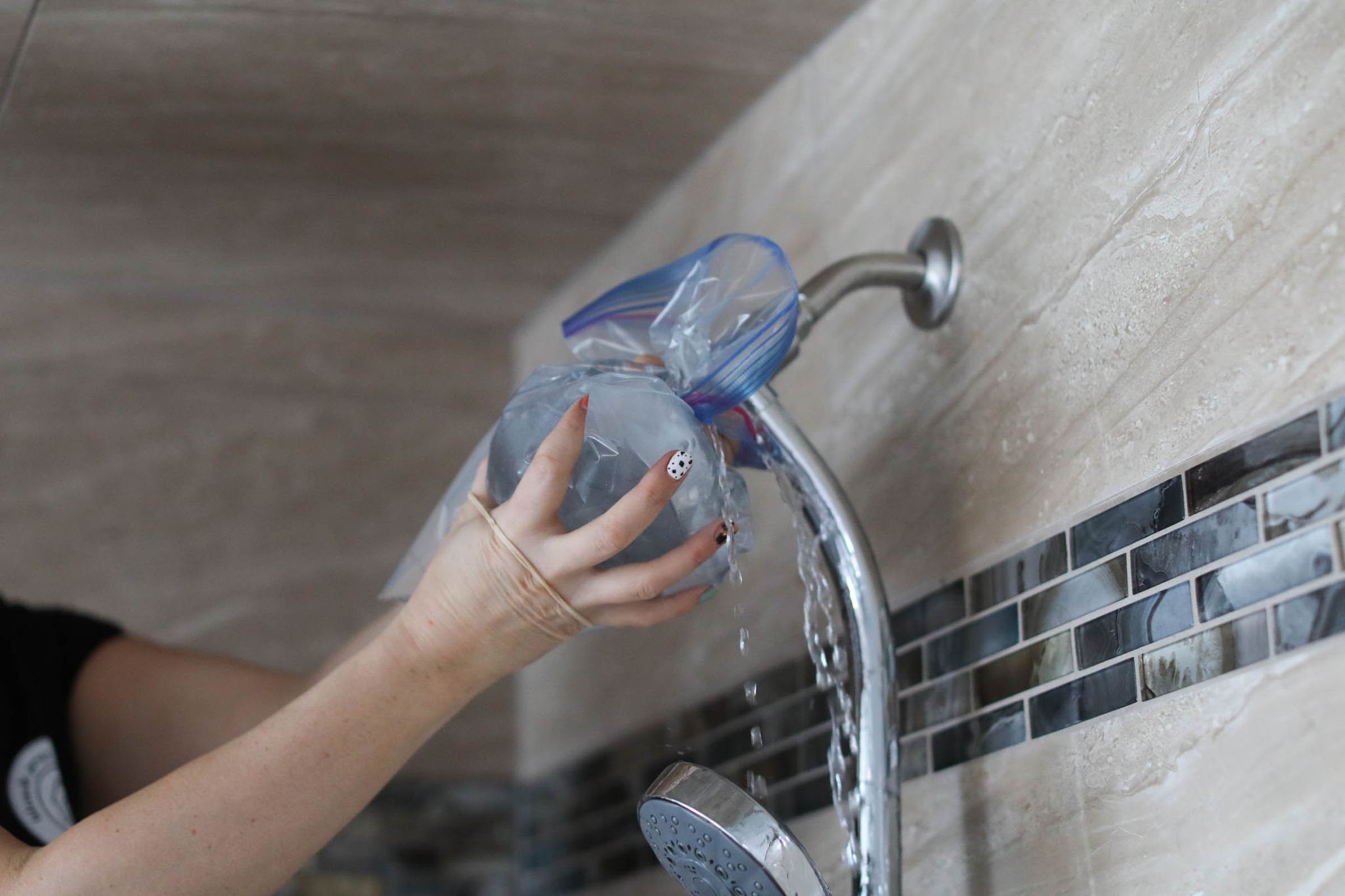
You’ll need something to hold the vinegar around the shower head. A plastic bag that can be tied or a small container works perfectly. This allows the vinegar to soak the buildup without making a mess.
Rubber Band Or Twist Tie
Securing the plastic bag filled with vinegar around the shower head is key. A rubber band or twist tie does the job well and keeps the bag in place during soaking. This simple tool prevents vinegar from spilling and keeps the cleaning process contained.
Old Toothbrush Or Soft Brush
After soaking, scrubbing away loosened calcium is easier with an old toothbrush or a soft brush. This helps reach small holes and crevices in the shower head where buildup hides. Using a brush avoids scratching the surface while removing stubborn deposits.
Warm Water And Cloth
Once the calcium is removed, rinsing the shower head with warm water clears any leftover vinegar and residue. A soft cloth helps wipe and polish the surface for a clean shine. This step ensures your shower head looks and works like new.
Step-by-step Cleaning Process
Cleaning calcium buildup on a shower head restores water flow and improves shower quality. The process is simple and uses common household items. Follow these steps carefully for best results.
Removing The Shower Head
Turn off the water supply before removing the shower head. Use a wrench or pliers to loosen the nut connecting it to the pipe. Wrap a cloth around the nut to protect the finish. Unscrew the shower head carefully and set it aside.
Soaking In Vinegar
Fill a bowl with white vinegar. Submerge the shower head completely in the vinegar. Let it soak for several hours or overnight. Vinegar breaks down the calcium and mineral deposits effectively. Avoid using harsh chemicals that might damage the shower head.
Using Baking Soda Paste
Mix baking soda with a small amount of water to form a thick paste. Apply the paste to stubborn spots on the shower head. Use an old toothbrush to scrub gently. Baking soda adds extra cleaning power and removes tough residue.
Rinsing And Reattaching
Rinse the shower head thoroughly with warm water. Make sure all vinegar and baking soda are washed away. Dry the shower head with a clean cloth. Screw it back onto the pipe tightly but without over-tightening. Turn on the water supply and check for leaks.
Alternative Cleaning Methods
Calcium buildup on your shower head can be stubborn, but you don’t always need harsh chemicals to get it clean. There are alternative cleaning methods that are effective, easy to try, and often use ingredients you already have at home. These options can save you time, money, and reduce exposure to strong chemicals.
Commercial Calcium Removers
Commercial calcium removers are designed specifically to tackle mineral deposits. They often contain ingredients like hydrochloric acid or sulfamic acid that dissolve buildup quickly.
When using these products, follow the instructions closely. Wear gloves and ensure proper ventilation to protect your skin and lungs. One tip is to soak the shower head in a container with the remover for about 15-30 minutes, then scrub gently with a brush.
Have you noticed how some removers work faster than others? Trying different brands on a small area can help you find the best product for your situation.
Lemon Juice Solution
Lemon juice is a natural, mild acid that breaks down calcium deposits without harsh chemicals. It’s a popular alternative because it’s safe, smells fresh, and is easy to use.
To clean your shower head with lemon juice, soak a cloth or paper towel in the juice and wrap it around the affected areas. Let it sit for an hour or more, then rinse and scrub gently.
If you want extra power, mix lemon juice with baking soda to create a fizzy paste. This combination can help lift stubborn buildup while being gentle on your fixtures.

Credit: www.yahoo.com
Preventing Future Buildup
Preventing calcium buildup on your shower head is easier than you might think. Small habits can save you from frequent deep cleaning sessions and keep your water flow strong. By understanding the causes and taking proactive steps, you protect your shower head and enjoy a better shower experience.
Regular Maintenance Tips
Cleaning your shower head regularly can stop calcium buildup before it starts. Try wiping it down with a damp cloth every week to remove soap residue and minerals. If you notice any decrease in water pressure, soak the shower head in white vinegar for about an hour to dissolve early deposits.
Do you check your shower head often enough? Setting a reminder on your phone can help you maintain this simple routine. You don’t need fancy products—just basic household items like vinegar and a soft brush work wonders.
Installing Water Softeners
If your water is very hard, regular cleaning might not be enough. Installing a water softener can reduce the minerals that cause calcium buildup. This device treats your water before it reaches your shower, extending the life of your fixtures.
Water softeners come in different sizes and types, from whole-house systems to smaller units for individual taps. Consider your budget and water usage before choosing one. Have you thought about how much time and effort a softener could save you in the long run?
Benefits Of A Clean Shower Head
A clean shower head improves your daily shower experience greatly. Removing calcium buildup keeps water flowing smoothly. It helps the shower head last longer and work better.
Regular cleaning stops clogging and uneven water spray. This means you get a steady and strong water stream. Clean shower heads use less water because no holes are blocked.
Improved Water Pressure And Flow
Calcium buildup blocks water holes and lowers pressure. Cleaning restores full flow and strong water spray. It makes showers more refreshing and enjoyable.
Longer Lifespan Of Your Shower Head
Calcium can damage the shower head over time. Cleaning prevents corrosion and wear. A clean shower head stays functional for years.
Better Water Quality
Calcium deposits can mix with water and cause stains. Removing buildup helps keep water cleaner. It reduces the risk of skin irritation and dryness.
Energy And Water Savings
A clean shower head uses water more efficiently. You avoid wasting water and energy heating it. This lowers utility bills and helps the environment.
Enhanced Bathroom Hygiene
Calcium buildup can trap bacteria and mold. Cleaning removes these harmful deposits. It keeps your bathroom fresh and healthy.

Credit: clogwizards.com
Frequently Asked Questions
How Do I Remove Calcium Buildup From Shower Heads?
Soak the shower head in white vinegar for 1-2 hours. Then, scrub gently with a toothbrush to remove deposits. Rinse well with water to clear all residue for better water flow.
What Household Items Clean Calcium Deposits Effectively?
White vinegar and lemon juice are natural and effective for calcium removal. Baking soda mixed with vinegar also works as a gentle abrasive cleaner. These items break down mineral buildup safely.
How Often Should I Clean My Shower Head?
Cleaning your shower head every 3 to 6 months prevents heavy calcium buildup. Regular maintenance ensures consistent water pressure and extends the shower head’s lifespan.
Can I Use Chemicals To Clean Calcium Buildup Safely?
Mild acidic cleaners like vinegar are safe and eco-friendly. Avoid harsh chemicals that can damage the shower head’s finish or plumbing. Always follow product instructions for safety.
Conclusion
Cleaning calcium buildup on your shower head keeps water flowing well. Regular cleaning stops clogs and improves water pressure. Vinegar and baking soda work well as natural cleaners. Soaking the shower head is simple and effective. Clean your shower head every few months for best results.
A clean shower head helps your bathroom feel fresh. Small steps like this save money on repairs later. Give your shower head some care, and enjoy better showers.