Are you wondering how many watts a portable air conditioner uses and what that means for your energy bill? Knowing the wattage is key to choosing the right unit that keeps your space cool without draining your electricity.
You’ll discover exactly how to figure out the power consumption of portable air conditioners, so you can make smart decisions that save you money and keep you comfortable all summer long. Keep reading to find out what you need to know before buying or using a portable AC!
Portable Ac Power Basics
Understanding the power of a portable air conditioner helps you choose the right model. Power affects how well the unit cools and how much energy it uses. This section explains the basics of portable AC power. Knowing these facts helps you make smart decisions.
Let’s explore what watts measure and how they differ from BTUs. These terms are key to understanding portable air conditioners.
What Watts Measure
Watts show the amount of electrical power a device uses. For portable air conditioners, watts indicate how much electricity is consumed while running. Higher wattage means more energy use. Lower wattage means less energy use.
This helps estimate your electricity cost. It also shows how powerful the AC unit’s motor is. Watts do not directly measure cooling ability but tell you about energy consumption.
Difference Between Watts And Btus
BTUs measure the cooling power of an air conditioner. One BTU cools one pound of water by one degree Fahrenheit. Portable ACs usually list BTUs to show cooling strength. Watts measure energy use, while BTUs measure cooling capacity.
Higher BTU means stronger cooling. Higher wattage means more electricity used. You want a balance: enough BTUs to cool your space, but not too many watts to waste power.
Understanding both helps pick an efficient and effective portable air conditioner.

Credit: hvac-temecula-murrieta.com
Typical Wattage Range
Portable air conditioners usually use between 500 and 1500 watts. This range depends on the unit’s size and cooling power. Smaller models consume less energy, while larger ones need more watts to cool bigger rooms.
Understanding the typical wattage range of portable air conditioners can help you make an informed purchase decision. It allows you to assess the energy consumption and efficiency of the unit you’re considering. Knowing this can save you money on electricity bills and ensure you get the right size for your space. Let’s explore the typical wattage range across different sizes of portable air conditioners.Small Units
Small portable air conditioners are ideal for compact spaces like bedrooms or small offices. These units typically use between 700 and 1,200 watts. They are designed for efficiency and are perfect if you don’t need to cool a large area. These units are often more affordable and easier to move around. If you’re worried about energy costs, opting for a small unit can be a smart choice. However, consider whether its cooling capacity matches the room size.Medium Units
Medium-sized portable air conditioners are suitable for larger rooms or spaces with moderate cooling needs. These units generally consume between 1,200 and 2,500 watts. They strike a balance between power and efficiency, providing effective cooling without excessive energy use. If you’re considering a medium unit, check how it fits into your energy usage plan. Are you willing to trade slightly higher electricity costs for increased cooling power?Large Units
Large units are designed for expansive areas or rooms with higher cooling demands. These powerful machines can use anywhere from 2,500 to 4,000 watts. While they offer robust cooling, they also tend to consume more electricity. Large units are great for spaces like living rooms or open-plan areas. However, be mindful of the potential impact on your energy bill. Is the increased cooling capacity worth the extra cost for your needs? Choosing the right size unit involves weighing your cooling needs against energy consumption. How do you balance comfort with cost efficiency?Factors Affecting Power Usage
Understanding the power usage of a portable air conditioner helps manage energy costs. Several key factors influence how many watts these units consume. Knowing these elements can guide you in choosing the right model and using it efficiently.
Room Size
The size of the room affects the power needed to cool it. Larger rooms require more energy to maintain a comfortable temperature. A small unit in a big room will work harder and use more watts. Measure the room before picking a portable air conditioner.
Cooling Capacity
Cooling capacity is often measured in BTUs (British Thermal Units). Higher BTUs mean more power consumption. A unit with a high cooling capacity uses more watts to cool a space quickly. Match the BTU rating to the room size for balanced power use.
Energy Efficiency Ratings
Energy efficiency ratings show how well an air conditioner uses electricity. Look for units with a high EER (Energy Efficiency Ratio). Higher EER means less power is wasted. Energy-efficient models save watts and reduce electricity bills.
Calculating Energy Consumption
Calculating the energy consumption of a portable air conditioner helps manage electricity bills. Understanding how watts translate to actual power use can save money. This section breaks down the process into simple steps to make calculations easy and clear.
Estimating Daily Usage
First, find the wattage of your portable air conditioner. It is usually listed on the unit or in the manual. Multiply this wattage by the hours you use the device each day.
- Example: A 1,000-watt unit used for 5 hours means 1,000 x 5 = 5,000 watt-hours.
- Convert watt-hours to kilowatt-hours by dividing by 1,000.
- In this example, 5,000 watt-hours ÷ 1,000 = 5 kWh daily usage.
Monthly Power Costs
Calculate monthly energy use by multiplying daily kWh by days used. Then, multiply monthly kWh by your electricity rate per kWh.
| Daily kWh | Days per Month | Monthly kWh | Cost per kWh ($) | Estimated Monthly Cost ($) |
|---|---|---|---|---|
| 5 | 30 | 150 | 0.12 | 18.00 |
This table shows a typical cost estimate. Adjust values based on your usage and local rates.
Comparing Portable Acs To Other Cooling Options
Choosing the right cooling solution for your space depends largely on how much power it consumes and how effective it is. Portable air conditioners are popular for their convenience, but how do they stack up against other options? Understanding the wattage and efficiency of portable ACs compared to window units, central air systems, and fans can help you make smarter cooling decisions.
Window Units
Window air conditioners typically use between 500 and 1500 watts, depending on their size and cooling capacity. They are often more efficient than portable units because they vent directly outside, which reduces heat recirculation. If you have a window that fits a unit, this can be a great option to cool a single room without using too much electricity.
However, unlike portable ACs, window units are fixed installations. This limits your ability to move them between rooms. Are you okay with cooling just one space, or do you need flexibility?
Central Air Systems
Central air conditioning systems can consume anywhere from 2000 to 5000 watts or more, depending on the size of your home and the system’s efficiency. They cool your entire house evenly but come with higher energy costs compared to portable or window units.
While they provide consistent comfort, central systems lack the cost-effectiveness for small spaces or temporary cooling needs. If you’re considering energy use, does cooling the whole house make sense, or would targeted cooling work better?
Fans
Fans are the most energy-efficient cooling option, usually drawing between 10 and 100 watts. They don’t lower room temperature but improve air circulation, which can make you feel cooler. This makes fans an excellent low-cost option, especially if you want to reduce electricity bills.
Still, fans don’t replace air conditioners when outdoor temperatures are very high. Could combining a fan with a portable AC reduce your overall energy consumption without sacrificing comfort?
Tips For Reducing Power Use
Reducing the power use of your portable air conditioner not only lowers your electricity bills but also extends the unit’s lifespan. Small changes in how you operate and maintain your AC can make a noticeable difference in energy consumption. Let’s look at some practical tips that help you stay cool without wasting watts.
Optimal Temperature Settings
Setting your air conditioner to the right temperature is key to saving power. Aim for around 24-26°C (75-78°F); cooler settings force the unit to work harder and use more energy.
Think about how often you actually need the room to be ice-cold. Sometimes, just a few degrees warmer feels just as comfortable and cuts down electricity use significantly.
Regular Maintenance
Keeping your portable air conditioner clean and well-maintained improves efficiency. Dirty filters and clogged vents make the unit work overtime, consuming extra power.
Check and clean the filters at least once a month during heavy use. Also, make sure the exhaust hose is free from obstructions and properly vented to the outside.
Using Timers And Smart Controls
Timers and smart controls help you run your AC only when needed. You can schedule it to turn off when you leave the house or during cooler parts of the day.
Smart thermostats or remote controls let you adjust settings without getting up, so you avoid cooling an empty room. Have you tried setting your AC to turn off automatically after you fall asleep?
Choosing The Right Portable Ac
Choosing the right portable air conditioner depends on several key factors. One of the most important is matching the unit’s power to the size of the room. A unit that is too weak will not cool effectively. Too strong, and it wastes energy and money. Understanding wattage and efficiency helps you pick the best model for your space and budget.
Matching Wattage To Room Size
The size of the room determines the wattage you need. Small rooms require less power, while larger rooms need more. As a rule:
- Up to 150 sq. ft.: 500 to 700 watts
- 150 to 300 sq. ft.: 700 to 1,200 watts
- 300 to 500 sq. ft.: 1,200 to 1,500 watts
Check the BTU rating too, as it shows cooling capacity. Higher BTUs mean more power. Match BTUs and watts to your room size for efficient cooling.
Energy Star Models
Energy Star portable ACs use less electricity. They meet strict energy efficiency guidelines. These models save money on electric bills. They also reduce environmental impact. Choosing Energy Star units ensures better performance with lower energy use.
Budget Vs. Efficiency
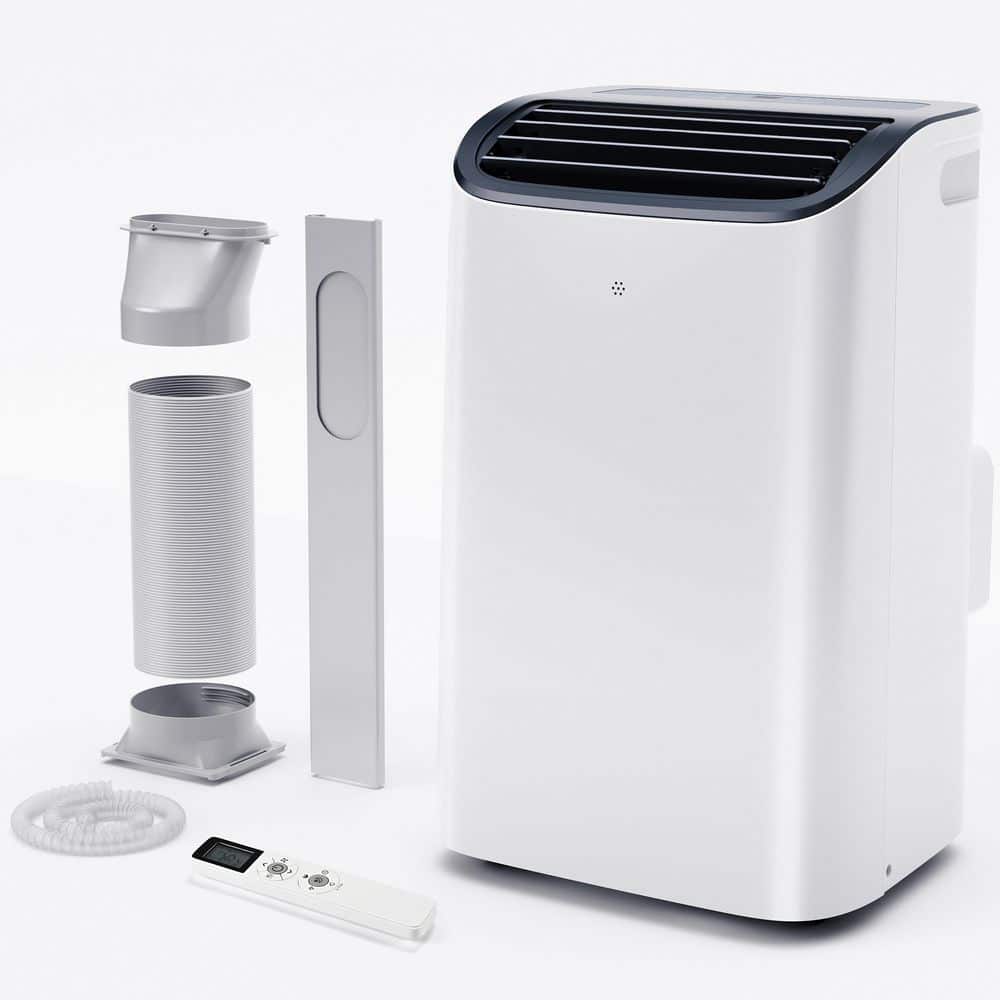
Cheaper units may use more power and cost more to run. Efficient models cost more upfront but save money long term. Consider how often you will use the AC. For frequent use, invest in a higher efficiency unit. For occasional use, a budget model might suffice. Balance your needs and costs carefully.

Credit: www.amazon.ca
Credit: www.homedepot.com
Frequently Asked Questions
How Many Watts Does A Portable Air Conditioner Use?
Portable air conditioners typically use between 800 and 1500 watts. The exact wattage depends on the unit’s BTU rating and efficiency. Higher BTU units consume more power, suitable for larger rooms, while smaller models use less energy for compact spaces.
What Affects The Wattage Of Portable Air Conditioners?
Wattage depends on the unit’s BTU capacity, cooling technology, and energy efficiency rating. Additional factors include fan speed, compressor type, and room insulation. Efficient models consume fewer watts while providing optimal cooling, helping reduce electricity costs.
How To Calculate Power Consumption Of A Portable Ac?
Multiply the unit’s wattage by the hours used daily, then divide by 1000. This gives kilowatt-hours (kWh), the electricity consumed. For example, a 1000-watt AC used 8 hours consumes 8 kWh. Use this to estimate your monthly energy cost.
Are Portable Air Conditioners Energy Efficient?
Many portable air conditioners have energy-saving features and high EER ratings. However, they generally use more watts than window units. Choose models with Energy Star certification for better efficiency and lower electricity bills.
Conclusion
Knowing the wattage of a portable air conditioner helps you manage energy use. Smaller units use fewer watts but cool less space. Larger models use more watts but cool bigger rooms faster. Choosing the right size saves money and keeps you comfortable.
Always check the energy label before buying. This way, you avoid high electricity bills. Remember, efficient use extends your unit’s life. Simple steps can make a big difference in cooling your home smartly.